AI Industry
Anthropic Gives Agent Skills to the Linux Foundation
Oct 23, 2026·5 min read·By Rahish Saifi
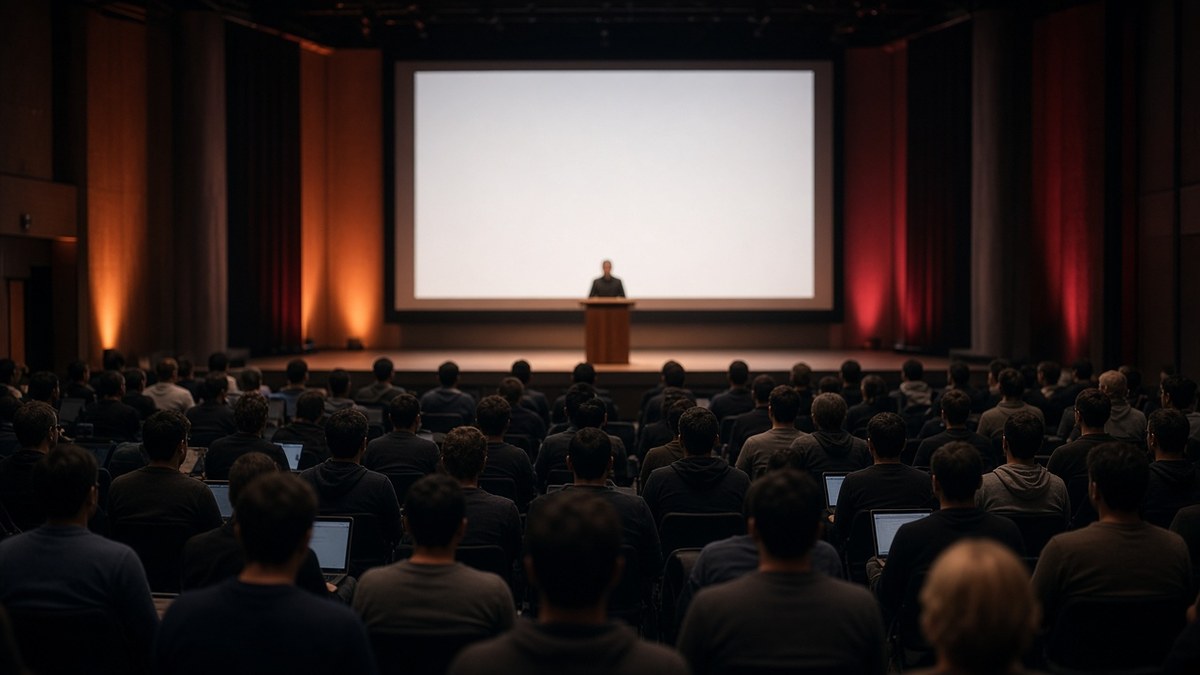
On October 22, 2026, Anthropic donated Agent Skills—the open SKILL.md format for teaching agents tasks with instructions, scripts, and reference material—to the Agentic AI Foundation (AAIF) under the Linux Foundation. The same day, AAIF announced four new hosted projects at AGNTCon + MCPCon North America in San Jose, growing the foundation from three launch projects to ten in its first year. For teams shipping agents in Cursor, VS Code, GitHub Copilot, ChatGPT, and dozens of other products, the move is less about a new API and more about where the standard will be governed—next to MCP, which Anthropic already placed under AAIF.
Key facts
| Item | Detail |
|---|---|
| Announcement | October 22, 2026 — Anthropic blog; AAIF and Linux Foundation press releases; unveiled at AGNTCon + MCPCon North America (Oct. 22–23, San Jose McEnery Convention Center) |
| What moved | Agent Skills name and logo, GitHub organization, and agentskills.io domain to AAIF (Anthropic) |
| Adoption (Anthropic) | 70+ agent platforms integrated Agent Skills, including ChatGPT, Cursor, GitHub Copilot, and VS Code; 1 million skills published and nearly 280 million installed |
| Licensing | Open specification under Apache 2.0 and CC BY 4.0 (AAIF) |
| Governance | Multi-company Technical Steering Committee; engineers from Anthropic, Google, OpenAI, and others maintain as individuals; David Soria Parra and Mahesh Murag are Lead Maintainers (Anthropic; AAIF) |
| Membership | No AAIF membership required to use or contribute (Anthropic) |
| AAIF scale | 10 hosted projects after four Oct. 22 additions, up from 3 at launch in December 2025 (Linux Foundation) |
| New projects (Oct. 22) | Agent Skills (Anthropic), Open Responses (OpenAI), OpenEnv (Hugging Face), OpenSandbox (Alibaba) |
| Existing AAIF projects cited | Agent2Agent (A2A), Agent Router, agentgateway, AGENTS.md, goose, and Model Context Protocol (MCP) (Linux Foundation) |
| Roadmap (proposed) | Versioned releases, a formal proposal process, and security guidance for authors and installers (Anthropic) |
What a skill is
Anthropic describes a skill as a folder that contains a SKILL.md file teaching an agent a specific task or domain, plus any scripts or reference material the agent needs. The format emerged from Claude Code: general models handled broad knowledge work but often missed procedural steps real teams rely on. Within weeks of Anthropic's October 2025 skills launch, developers published thousands of skills on GitHub and built loaders for Codex, Cursor, and OpenCode; Anthropic then published Agent Skills as an open standard in December 2025 under its own GitHub org and domain so any agent could consume the same packages.
AAIF frames skills as a way to capture how your team works—examples, checklists, and quality bars—not just what a foundation model already knows. That portability is why internal skill libraries and registries such as skills.sh (cited by AAIF with 1 million listed skills and nearly 280 million installations in seven months) matter: a workflow saved on one laptop does not scale; a shared format does.
What changes—and what does not—for developers
What stays the same: If you already author SKILL.md trees or install skills from a marketplace, the donation does not by itself break paths or loaders. Anthropic says you can keep using and contributing without joining AAIF. The spec remains at agentskills.io; maintainers continue as individuals from multiple vendors.
What shifts: Governance moves to a vendor-neutral home, the same pattern Anthropic used when it donated MCP to AAIF, which it co-founded with Block and OpenAI in December 2025. Decisions on versioning, proposals, and security expectations will run through AAIF's steering committee rather than living solely inside Anthropic's product org—important if your roadmap assumes skills work the same in Cursor today and another agent stack tomorrow.
For platform teams, the Linux Foundation announcement maps four layers of the agentic stack AAIF now hosts: capabilities (Agent Skills), model interfaces (Open Responses), training and evaluation environments (OpenEnv), and secure execution sandboxes (OpenSandbox)—alongside routing, gateways, agent-to-agent protocols, and MCP. You do not have to adopt all ten projects; the point is a single neutral venue when multiple vendors touch the same workflow.
The four new AAIF projects (same day)
Beyond Agent Skills, AAIF welcomed three other contributions on Oct. 22:
- Open Responses (OpenAI): an open spec for multi-provider, interoperable LLM interfaces based on the OpenAI Responses API—shared schema, streaming events, and extensible tooling so one request description can run across providers with minimal translation.
- OpenEnv (Hugging Face): an open framework for reinforcement-learning environments—containerized services exposing a familiar agent interface, MCP, and Gym-style training protocols so environments are plug-and-play and shareable. Hugging Face and Meta-PyTorch co-launched OpenEnv in October 2025 as an open hub for agentic environments.
- OpenSandbox (Alibaba): a general-purpose sandbox platform with multi-language SDKs, unified APIs, and Docker/Kubernetes runtimes for coding agents, GUI agents, evaluation, code execution, and RL training—plus a sandbox protocol for lifecycle and execution APIs.
As AAIF CTO and co-founder Manik Surtani put it, “four different companies chose to contribute them to neutral governance”—a pattern that mirrors how MCP became a shared tool-calling layer for many agents.
Security: treat skills like code you did not write
Skills can bundle executable scripts and detailed instructions that steer model behavior. Anthropic's proposed roadmap explicitly calls for security guidance for people who write and install skills—a signal that the ecosystem recognizes supply-chain risk as installs approach hundreds of millions.
Until that guidance hardens, teams should audit skills before installing: read SKILL.md, inspect bundled scripts, prefer signed or internally reviewed packages, and scope filesystem and network access the same way you would for an npm dependency or Copilot extension. A skill that encodes your incident-response playbook is valuable; a skill copied from an anonymous registry is not automatically safe because it ships in a standard folder layout.
What happens next
Anthropic proposes starting with versioned specification releases, a formal proposal process, and the security guidance above—prioritizing community input and transparent decisions, as with MCP. Contributors can follow changes on GitHub and join the project's Discord to comment on spec updates (Anthropic).
AAIF will seat Agent Skills under its Technical Steering Committee with maintainers from multiple organizations. Expect the first visible outputs to be process and documentation (versioning rules, contribution paths) rather than a breaking format overnight—but plan for semver-style spec bumps once versioned releases land.
Why it matters for agent builders
Agent products are converging on a small set of open interchange formats. MCP standardized tools and context; Agent Skills standardizes packaged expertise. Parking both under AAIF gives enterprises one governance story when security, procurement, and platform teams ask who controls the roadmap.
If you are standardizing internal playbooks—code review, release checklists, brand voice, compliance steps—skills are now explicitly a foundation-hosted bet, not a single-vendor experiment. The Oct. 22 batch also shows AAIF expanding horizontally: Open Responses for provider-neutral APIs, OpenEnv for RL training loops, OpenSandbox for isolation—so agent builders can mix neutral layers instead of re-integrating per vendor.
Bottom line
Anthropic's donation moves Agent Skills—the SKILL.md standard integrated by 70+ agent platforms, with 1 million skills published and nearly 280 million installs—into the same Linux Foundation–backed AAIF that already hosts MCP. Day-to-day authoring and installation do not need to change immediately, but roadmap and security expectations will increasingly flow through AAIF. Read skills before you install them, watch for versioned spec releases, and treat the four Oct. 22 project announcements as a signal that agent infrastructure is consolidating under open, multi-vendor governance—not a single product roadmap.
Sources
- Anthropic: Donating Agent Skills to the Agentic AI Foundation — Oct. 22, 2026
- Linux Foundation: Agentic AI Foundation Announces Four New Projects: Agent Skills, Open Responses, OpenEnv, and OpenSandbox — Oct. 22, 2026
- AAIF: Agent Skills: Sharing Team Expertise Across AI Agents — Oct. 22, 2026
- Hugging Face: Building the Open Agent Ecosystem Together: Introducing OpenEnv — Oct. 23, 2025