AI Industry
Meta Opens Muse Spark Weights: 816B Model Runs on Two Macs
Oct 16, 2026·5 min read·By Rahish Saifi
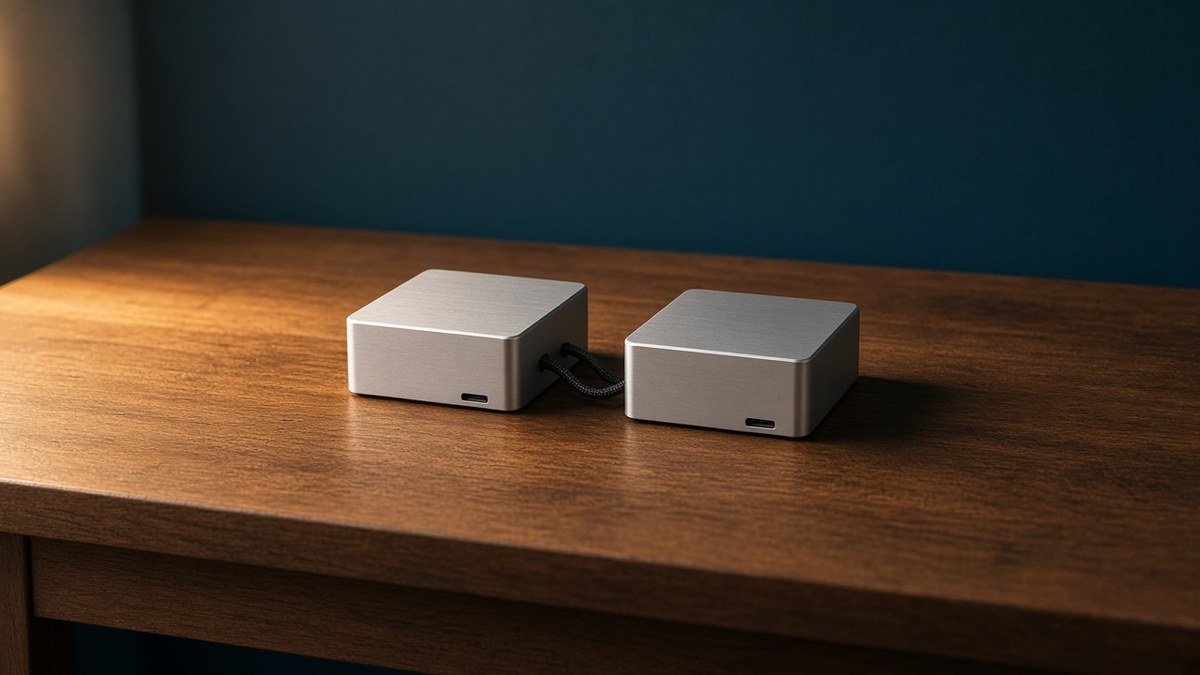
Meta on October 15, 2026 released the open weights of Muse Spark Open, pitching it as the most capable U.S. open-weight model to date and pairing the launch with Apple so developers can run the full checkpoint on paired M5 Ultra Mac Studios instead of only in a cloud datacenter. The move lands in the same week Meta shipped its closed Muse Wonder frontier model and as Chinese labs such as StepFun publish large MoE checkpoints—making Spark Open as much a distribution and hardware story as a benchmark race.
Key facts
| Item | Detail | Source |
|---|---|---|
| Model | Muse Spark Open; 816B total / 42B active; 1M-token context; natively multimodal | Meta AI (Oct. 15, 2026) |
| Desktop deployment | First in its class on two M5 Ultra Mac Studios via MLX; up to 512 GB unified memory per machine | Meta AI |
| Mac Studio cost | At least $10,799 for M5 Ultra with 256 GB; 512 GB config later in Oct.; multiple machines required | CNBC (Oct. 15, 2026) |
| API access | Baseten, Fireworks AI, Groq, Modal, Nebius, OpenRouter, Together AI | Meta AI |
| Weights hosts | Hugging Face collection, Amazon SageMaker AI, Google Cloud Model Garden, Microsoft Foundry Models | Meta AI |
| License | Muse Model License with limited commercial terms | Meta AI |
| Datacenter training | Trained on NVIDIA GB300 NVL72; up to 50K tokens/sec per GPU on that stack | NVIDIA (Oct. 15, 2026) |
What Meta released
In its official post, Meta describes Muse Spark Open as built for coding and agentic work: long-horizon tasks, complex software engineering, and multi-step reasoning. The architecture is a sparse mixture-of-experts design with 816 billion total parameters and 42 billion active per token, with a 1 million-token context window and native multimodal inputs.
Meta positions the release as a practical open-weight option for teams that want to inspect weights, fine-tune, or run inference on their own hardware. The company highlighted on-device agentic demos using Muse Code powered by Muse Spark Open—including shipping real iOS changes to the open-source Mastodon client Ice Cubes and driving DaVinci Resolve end to end, including frame-by-frame footage review and vertical cropping.
Meta says Muse Spark Open runs on SGLang, vLLM, TensorRT-LLM, Hugging Face Transformers, Apple MLX, llama.cpp, and Unsloth, with vendor optimizations and auto-tunable Helion GPU kernels in SGLang (roughly 1.03–3.95× kernel speedups on NVIDIA and AMD, per Meta). Fine-tuning is supported via PyTorch TorchTitan.
Why the Apple Mac Studio angle matters
The headline partnership is local inference across two Apple M5 Ultra Mac Studios using the latest MLX framework—something Meta says is a first for a model of this class on a desktop. Apple’s M5 Ultra unified memory allows the GPU to use up to 512 GB per Mac Studio; Meta cites 1.2 TB/s memory bandwidth and says two Studios together behave like one machine with about a terabyte of unified memory, enough to hold the full Muse Spark Open checkpoint.
CNBC reported that Apple and Meta revealed the collaboration on October 15 and that customers can pair two to four Mac Studios to run the model locally for coding, video analysis, and other agentic workflows. Both companies framed on-prem running as improving security and cutting ongoing cloud spend—though the hardware bill is steep.
A Mac Studio with the required M5 Ultra chip and 256 GB of memory starts at at least $10,799, per CNBC; a 512 GB configuration is due later in October, and users still need multiple machines for the full model. That price point makes Spark Open a workstation-class play for studios, regulated industries, and well-funded R&D teams—not a consumer download.
Apple also published chip benchmarks and MLX documentation on splitting open models across machines. CNBC calls it the first public Apple–Meta AI partnership since 2017.
Where developers can get it
Teams that do not want to buy Mac clusters can start in the cloud. Meta lists API access today through Baseten, Fireworks AI, Groq, Modal, Nebius, OpenRouter, and Together AI.
Weights are on a Hugging Face collection plus Amazon SageMaker AI, Google Cloud Model Garden, and Microsoft Foundry Models.
For NVIDIA datacenter users, NVIDIA’s developer blog says the model, trained on GB300 NVL72, routes each token to 8 of 256 experts, and cites up to 50K tokens/sec per GPU on GB300 NVL72 and up to 600 tokens/sec per user in that configuration—useful context for teams sizing agentic coding fleets on NVIDIA hardware rather than Macs.
License and safety
Muse Spark Open ships under the Muse Model License, which Meta describes as including limited commercial terms that still allow many developers to use the model free. As with other recent Meta releases, the company added safety post-training and says it evaluated the model under the Meta Superintelligence Scaling Framework, meeting release thresholds; a full evaluation report is promised as "available soon."
Enterprises will still want the forthcoming evaluation report and the license text itself before production use on sensitive codebases.
How it compares to Muse Wonder and other open weights
Muse Spark Open is explicitly the open-weight sibling to Meta’s proprietary frontier line. CNBC reported that it is less advanced than Muse Wonder, which Meta released earlier in the week; for what Wonder adds in closed form, see our write-up of Meta Launches Muse Wonder, Its First Frontier AI Model.
Meta AI chief Alexandr Wang told CNBC: "These aren't the most capable models that we've developed or released ... But we think that there will be a lot of companies and developers who sort of use this model and tinker with it at small scale and then seek to ramp up and scale up their usage."
On size and context, Spark Open (816B total, 42B active, 1M context) sits in the same conversation as other recent large MoE open-weight releases. StepFun’s Step 5 Preview open weights—also published October 15, 2026—is a 600B MoE with 27B active parameters and a 1 million-token context window on Hugging Face. The differentiator for Spark Open in the U.S. narrative is Meta’s claim of top-tier open-weight capability plus the Apple desktop path; StepFun’s pitch centers on agentic and finance benchmarks from a Chinese lab.
What to watch next
Near-term signals include Meta’s promised full evaluation report, arrival of 512 GB Mac Studios, and whether Helion-tuned cloud inference keeps most teams on APIs while still downloading weights for fine-tuning. Meta’s Ice Cubes and DaVinci Resolve demos will show whether Muse Code plus Spark Open can justify five-figure local hardware—or whether Muse Wonder and closed APIs remain the flagship story.
Bottom line
Meta opened Muse Spark Open on October 15: an 816B multimodal MoE with a 1M-token context window, partner APIs, hyperscaler weight hosts, and what Meta calls a first-in-class two Mac Studio path for on-device agentic work—at a hardware cost that starts around $10,799 per machine and scales with every additional Studio you chain.