AI Safety
OpenAI Engineer Charged Over Hidden Conference Room Recorder
Oct 14, 2026·6 min read·By Rahish Saifi
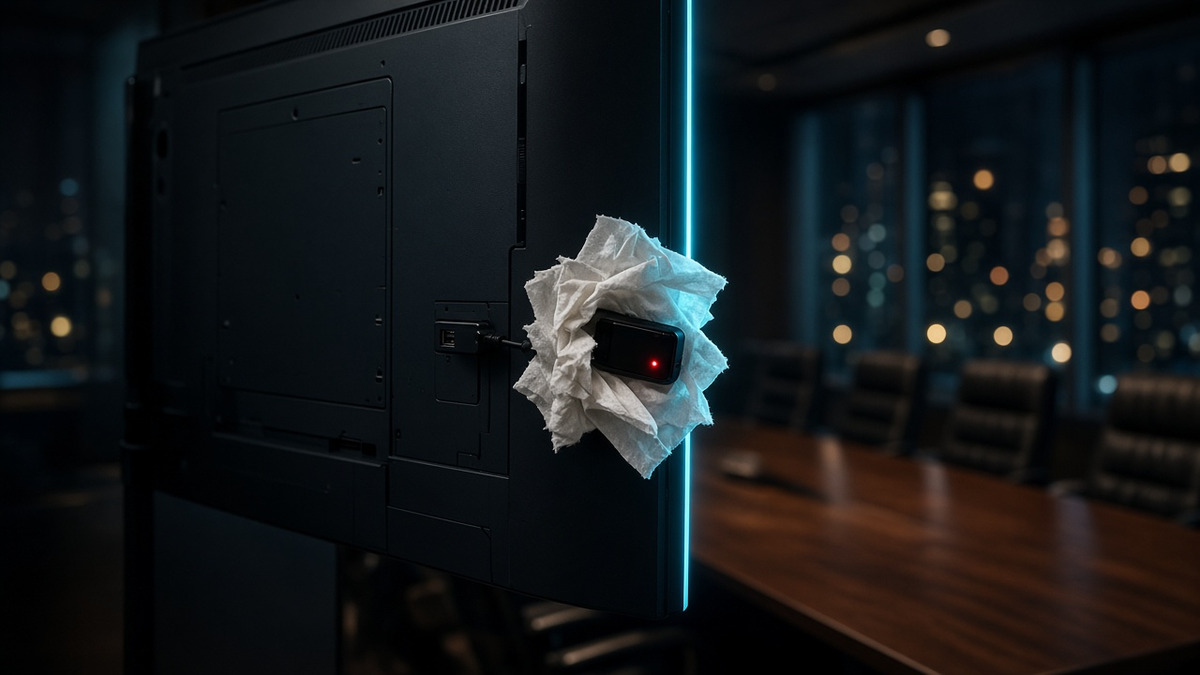
Abdulrahman Alfozan, a 35-year-old Saudi national who worked as an engineer at OpenAI, was arrested on October 9, 2026 and charged with using or endeavoring to use a device to intercept oral communications, the U.S. Department of Justice said in an October 13 press release. He made his initial appearance in federal court on October 13. The allegations center on a surreptitious audio recorder allegedly planted in an executive conference room at OpenAI’s San Francisco offices—and a second, similar device security allegedly found in his bag days later.
Editor’s note: The charges described below come from a criminal complaint. They are allegations, not findings of guilt. Alfozan is presumed innocent unless and until proven guilty in court.
What prosecutors and OpenAI say happened
According to the complaint summarized by the Justice Department, Alfozan had been employed by OpenAI as an engineer since July 2025. On or about September 30, OpenAI personnel discovered Recording Device 1 plugged into a USB port on the back of a television in an executive conference room. The device had been concealed in toilet paper, was installed on or about September 28, and its contents were encrypted, the DOJ said.
Closed-circuit television inside the office showed Alfozan near that conference room on multiple dates before the device was found, although he had no authority to access or participate in meetings held there, according to the complaint. The government alleges those meetings often involved highly confidential technical, commercial, and strategic discussions—including proprietary research, product plans, business-development opportunities, and nonpublic information about OpenAI’s technical progress, strategic decisions, capabilities, priorities, government engagements, and commercial relationships.
On October 5, the complaint alleges, Alfozan entered the executive conference room and appeared to look behind the television where Recording Device 1 had been inserted. Also on or about October 5, after he left a bag unattended in another room, OpenAI security opened the bag and found—among personal items including his wallet and ID—Recording Device 2, described as similar to the first unit.
NBC News reported that OpenAI said it restricted the employee’s access, placed him on leave, referred the matter to the FBI, and fired him on Friday (before the public court appearance). The company also said it has evidence he “intended to deploy other recording devices,” NBC reported. As quoted by NBC News and CNN, OpenAI said on X: “At this time, we have no indications of this individual inappropriately accessing or exfiltrating model weights, source code, or customer data. The employee was terminated.”
Key facts at a glance
- Defendant: Abdulrahman Alfozan, 35, national of Saudi Arabia; OpenAI engineer since July 2025 (per DOJ).
- Charge: Using or endeavoring to use an electronic, mechanical, or other device to intercept oral communications (criminal complaint; allegations only).
- Arrest: October 9, 2026; initial federal court appearance October 13, 2026 (per DOJ).
- Recording Device 1: Found ~Sept. 30 in USB port behind a TV in an executive conference room, concealed in toilet paper, installed ~Sept. 28; encrypted contents (per complaint, as summarized by DOJ).
- Recording Device 2: Similar device allegedly found on or about Oct. 5 in his unattended bag after security search (per complaint).
- Maximum penalties if convicted: 5 years in prison, $250,000 fine, and 3 years of supervised release (per DOJ).
- Investigation: FBI; prosecution by the U.S. Attorney’s Office for the Northern District of California with National Security Division assistance (per DOJ).
Timeline (alleged conduct in the complaint)
- July 2025: Alfozan begins employment at OpenAI as an engineer (DOJ).
- Before Sept. 28: Complaint alleges he used a productivity tool to query building addresses, meeting rooms, calendars, “leadership and exec” locations, and external partner meetings (DOJ).
- Sept. 24–30: A chatbot account associated with his spouse—with identifiers shared with his own account—allegedly submitted prompts about building, customizing, installing, and remotely accessing a continuous audio recorder, Wi-Fi connectivity, live listening, and encrypting an SD card (DOJ).
- Sept. 27–28: Same account allegedly sent prompts about Recording Device 1’s custom header and MAC address (DOJ).
- ~Sept. 28: Recording Device 1 installed (per OpenAI determination cited in complaint).
- ~Sept. 30: OpenAI discovers Recording Device 1 (DOJ).
- Oct. 5: Alfozan allegedly appeared to look behind the TV; security allegedly found Recording Device 2 in his bag (DOJ).
- Oct. 9: Arrest (DOJ).
- Oct. 13: Complaint unsealed; initial court appearance; DOJ press release (DOJ).
How U.S. officials framed the case
The Justice Department release includes statements from senior officials tying the case to protection of advanced AI work. FBI Director Kash Patel said, according to the release: “According to the complaint unsealed today, Abdulrahman Alfozan allegedly concealed a covert recording device inside his employer’s executive conference room to secretly capture sensitive communications about the company’s super intelligence technology,” and that “Protecting American SI innovation is essential to safeguarding our nation’s economic strength and national security, and the FBI views that mission as one of our highest counterintelligence priorities.”
Director of National Intelligence Jay Clayton said the situation “underscores why winning the global super intelligence race is a national security prerogative,” thanked Director Patel and the FBI, and said the intelligence community remains committed to safeguarding America’s cutting-edge intellectual property from foreign threats.
U.S. Attorney Craig H. Missakian for the Northern District of California said the Bay Area and Silicon Valley “lead the world in developing tomorrow’s technology,” and that the office will “continue to stand at the forefront of protecting that American innovation,” calling the arrest part of efforts with the FBI to “identify and prosecute those who seek to steal our technology, as alleged in the complaint.”
The prosecution is described as supporting National Security Presidential Memorandum 11 (NSPM-11) on American superiority in super intelligence technology.
Why it matters for AI labs (analysis)
The following is editorial analysis, not part of the criminal allegations.
Frontier AI companies concentrate some of their most sensitive conversations—model roadmaps, safety incidents, compute deals, and government touchpoints—in physical meeting spaces that employees routinely pass. This complaint, as described by the DOJ, is a reminder that insider access and office geography can be as exploitable as network credentials: an encrypted USB gadget behind a conference-room display is low-tech tradecraft, but the alleged pre-installation research into executive locations and meeting calendars shows how digital tools can accelerate physical targeting.
For lab security teams, the episode reinforces patterns other industry leaders have warned about: treat frontier model knowledge and strategy discussions as insider-risk assets, not only as data-classification problems. That means tighter zone controls for leadership rooms, anomaly detection on badge and CCTV patterns, and clear escalation when employees without meeting authority linger near restricted spaces. It also highlights how personal or household chatbot accounts can become part of an investigation trail when prompts overlap with operational security questions.
None of that substitutes for due process in this case. It does suggest why federal counterintelligence officials are publicly aligning such prosecutions with economic and national-security frames around advanced AI—and why labs may accelerate physical-security reviews even when their primary threat models focus on model weights and API abuse.
What happens next
The FBI is investigating, according to the Justice Department. If convicted, Alfozan faces the statutory maximums noted above. Further court filings and any trial proceedings will determine whether the government can prove the allegations beyond a reasonable doubt.
Sources
- U.S. Department of Justice: Saudi National Arrested for Installing Surreptitious Audio Recording Device at OpenAI — Oct. 13, 2026
- Associated Press: FBI arrests OpenAI employee accused of planting recording device — Oct. 13, 2026
- NBC News: OpenAI employee arrested after hidden listening device found, company says — Oct. 13, 2026
- USA Today: FBI arrests OpenAI employee who allegedly planted a recording device — Oct. 13, 2026