AI Industry
CERN and Mistral Plan Flare, a Large Physics Model
Oct 16, 2026·4 min read·By Rahish Saifi
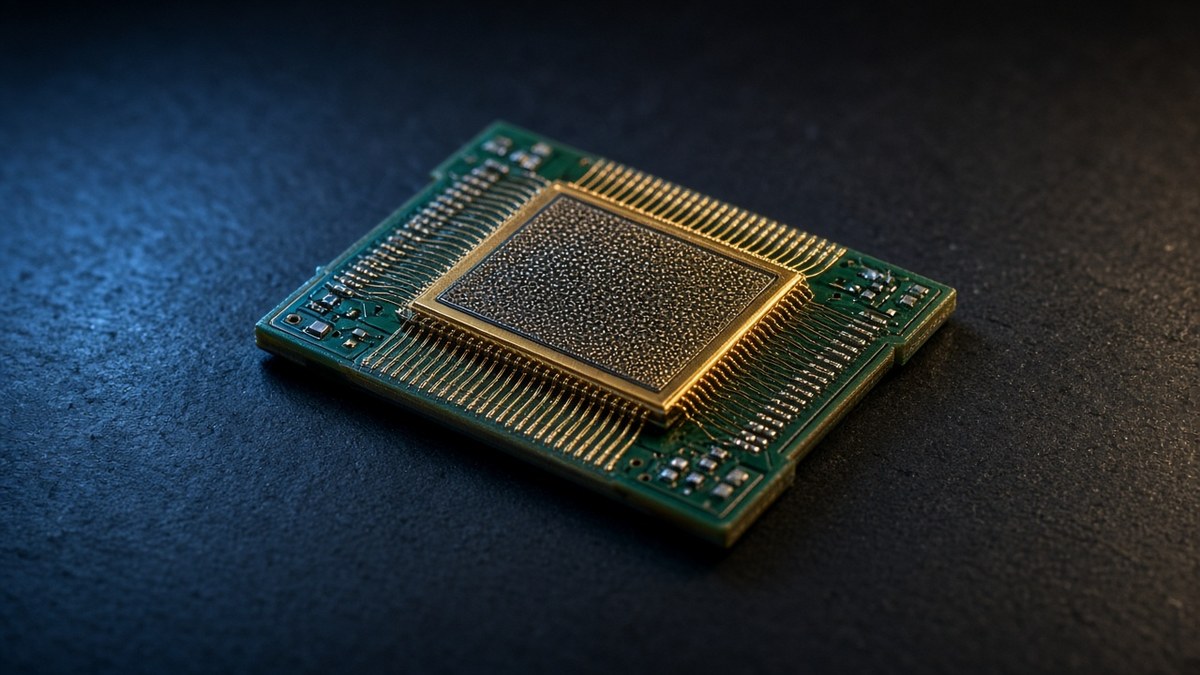
CERN and French AI company Mistral signed a statement of intent on October 15, 2026 for a long-term strategic partnership on foundation models for scientific discovery. Their stated goal is a single pretrained Large Physics Model—what CERN describes as the first foundation model for collider physics—trained on billions of simulated proton-proton collisions at the Large Hadron Collider (LHC). Reporting that cites a CERN spokesperson, including Reuters via Channel News Asia, says the partners aim to build that model under the name Flare; CERN's own announcement frames the work as a Large Physics Model without using that product name.
Key facts
| Item | Detail |
|---|---|
| Parties | CERN and Mistral AI |
| Agreement | Statement of intent for a long-term strategic partnership (Oct. 15, 2026) |
| Goal | One pretrained Large Physics Model for collider physics—CERN calls it the first foundation model in this domain |
| Training data | Billions of simulated proton-proton collisions at the LHC |
| Intended tasks | Reconstructing collisions, identifying particles, flagging unexpected signals, evaluating future detector designs |
| Stored LHC data | CERN cites roughly one exabyte (~1 million terabytes) of experimental data; collision rates set to rise tenfold with HL-LHC around 2030 |
| Name "Flare" | Used in Reuters/CNA reporting citing CERN; not in CERN's primary announcement text |
| Timeline / budget | Not disclosed in CERN's post |
What was announced
In its official post CERN and Mistral join forces to accelerate AI for science, CERN said the two organizations will work together on foundation models that can accelerate scientific discovery. The partnership starts in high-energy physics, with potential to extend to other scientific fields later.
CERN positions the effort around a pretrained model that could learn patterns across the full pipeline of collider data analysis. Today, reconstruction typically runs through a chain of specialised algorithms; machine learning is already embedded in parts of that chain, but a foundation model could—in principle—learn representations that span the entire workflow rather than isolated steps.
CERN calls Mistral "a leading European AI company"; the same week brought consumer and open-weight news elsewhere in the sector (for example Mistral's open-weight preview), but CERN's announcement is separate from any product release and does not tie the Large Physics Model to a public model card or weights drop.
Why a Large Physics Model / Flare
CERN's post lists concrete jobs for the planned model: reconstructing collisions, identifying particles, flagging unexpected signals that might hint at new physics, and evaluating designs for future detectors before they are built.
According to Reuters reporting summarized by CNA, a CERN spokesperson said the approach mirrors large language models but trains on collision data instead of text, and is meant to replace some specialised algorithms now used to reconstruct and identify particles (Reuters). That is an engineering ambition, not a shipped capability: no trained Flare checkpoint or API was announced on October 15.
Foundation models in other domains win by pretraining on vast, diverse corpora and then adapting to downstream tasks. Here simulation with known physics provides labelled training data; CERN says the model should also flag unexpected signals.
LHC data scale
CERN notes it stores about one exabyte of LHC experimental data—on the order of one million terabytes—and that collision rates are expected to increase roughly tenfold when the High-Luminosity LHC (HL-LHC) era arrives around 2030. That scale is why the lab frames AI as strategic: manual tuning of every algorithm in the chain becomes harder as statistics and channel complexity grow.
A shared Large Physics Model, if it works as envisioned, could offer the global physics community a common starting point—aligned with CERN's emphasis on capabilities that can be developed with exceptional rigour in high-energy physics and shared with the field.
Quotes
Enrica Porcari, CERN Chief Information Officer, said in CERN's announcement:
"High-energy physics provides a unique environment in which artificial intelligence can be developed and tested with exceptional rigour. We are partnering with Mistral, a leading European AI company, to advance AI capabilities that can serve the whole physics community and be shared."
Johannes Brandstetter, Mistral Vice President of AI for Engineering, said:
"We are proud to work with CERN to explore what large-scale AI models can bring to the growing complexity of particle physics. Together, we have the opportunity to push the frontiers of high-energy physics, developing AI capabilities that have the potential to lead to new scientific discoveries."
Separately, CNA/Reuters noted that Mistral CEO Arthur Mensch wrote in Le Monde that frontier models are "now indispensable to scientific progress"—a media-reported comment on the broader role of AI in science, not a CERN press-release quote.
Caveats
- The October 15 document is a statement of intent, not a finished model, dataset release, or production deployment.
- CERN's post does not specify a timeline or budget for training or operating the Large Physics Model.
- The name Flare comes from secondary reporting (Reuters via CNA) citing CERN; readers should treat it as the reported working name unless CERN adopts it in primary materials.
- No Flare weights, benchmarks, or safety evaluations were published with the announcement—unlike Mistral's separate open-weight roadmap discussed in other October news.
- Replacing reconstruction algorithms touches experiment validation, systematic uncertainties, and collaboration governance; any real swap would require years of cross-checks against established physics results.
Bottom line
CERN and Mistral are betting that collider physics needs its own foundation model: pretrained on billions of LHC collision simulations, aimed at reconstruction, particle ID, anomaly flagging, and detector design. Official language centers on a Large Physics Model and a shared, rigorous AI stack for the physics community; press reports add the name Flare and an LLM-like training story. The partnership comes ahead of the HL-LHC, which CERN expects around 2030 with ten times more collisions—but as of October 15 it remains an intent to build, not a model you can download or call from an API.