AI Industry
Canva Launches Craft, Its First In-House AI Image Model
Oct 23, 2026·5 min read·By Rahish Saifi
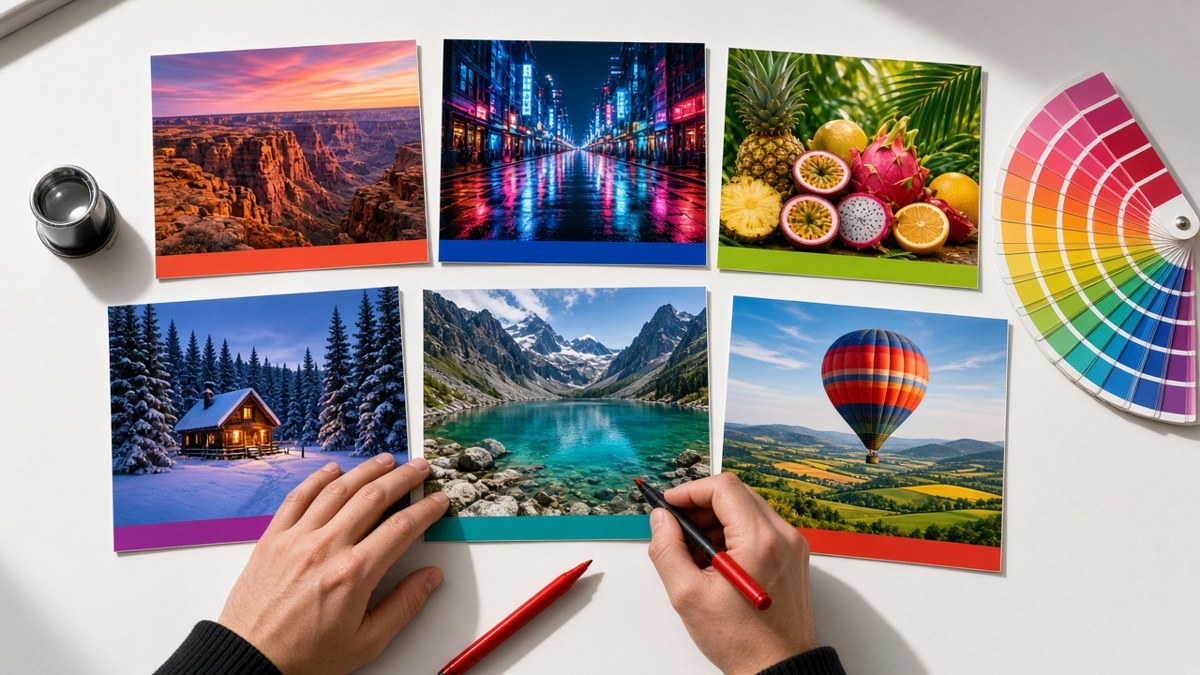
On October 22, 2026, Canva unveiled Canva Craft, the design platform's first state-of-the-art image generation model built and trained from scratch by Canva Research, its in-house AI lab. Craft targets marketing layouts, posters, and typography-heavy work—not only photorealistic scenes—and ships to every Canva user through Dream Lab while developers can pin it on the Connect API as craft_v1_2k. For a company that has long routed generation through third-party models, Craft is a bet that owning the stack improves quality, cost, and editability inside Canva's editor.
Key facts
| Item | Detail |
|---|---|
| Launch | October 22, 2026 (Canva newsroom; Canva developer announcement) |
| Architecture | Two stages: a planning model writes a composition plan (elements, spatial relationships, scale, hierarchy, text), then a rendering model outputs up to 2K across more than 30 aspect ratios (Canva) |
| Consumer access | All Canva users globally via Dream Lab (bottom-left panel or three-dot menu → Dream Lab, per Canva and The Verge) |
| API | model: "craft_v1_2k" on POST /v1/image-generations; poll GET /v1/image-generations/{jobId} (Canva Connect API) |
| API latency | Roughly 50–60 seconds end to end because Craft plans before it renders (Canva developers) |
| Languages | Prompts in any language; on-image text in 55 languages (Canva) |
| DesignArena (Canva claims) | #4 overall on the image leaderboard at debut; Canva Research calls itself the second most advanced lab for image generation by that benchmark. Subcategory ranks Canva cites: #1 People & Portraits, #1 Landscapes & Nature, #2 Abstract & Patterns, #4 Products |
| Roadmap | Craft-fast and Craft-ultrafast variants coming; Canva MCP support for Craft listed as coming soon (Canva; TechCrunch on ChatGPT and Gemini) |
Why Craft plans before it paints
Most image models map a prompt straight to pixels. Canva says Craft instead separates compositional planning from rendering. The planning stage interprets the prompt and drafts which elements appear, how they relate spatially, their relative scale, visual hierarchy, and any text that must land in the frame. Only then does the rendering model translate that plan into a high-fidelity image.
Canva argues the split improves legible text, precise object placement, and consistent relationships in busy scenes—common failure modes for single-stage generators. It also underpins targeted edits: change one element without needlessly redrawing the whole canvas, a pattern The Verge ties to Canva's earlier layer-based AI editing work. The same structure is meant to feed Magic Layers, turning generated images into editable design elements with JSON boundary boxing.
Trained on templates, not just photos
Canva says Craft's pre-training leans on millions of human-made templates from its content library—posters, social posts, presentations, infographics, menus, and typography-rich layouts—not only photographs. That design-first corpus is how Canva explains stronger layout hierarchy and type placement compared with models trained mainly on natural images.
After pre-training, Canva reports supervised fine-tuning and reinforcement learning with designer feedback and more than 25,000 internal head-to-head image pairs, prioritizing designer judgment when automated scores disagreed. TechCrunch notes Leonardo.ai researchers contributed after Canva's 2024 acquisition.
Benchmarks and what to believe
Canva cites DesignArena for external proof: Craft debuted fourth overall, and Canva Research calls itself the second most advanced lab for image generation there, with subcategory ranks of #1 People & Portraits, #1 Landscapes & Nature, #2 Abstract & Patterns, and #4 Products. The Verge also places Craft fourth, behind three OpenAI GPT-Image models. Treat these as Canva's read of a crowdsourced benchmark until you test your own layouts.
Where to use it today
Creators in Canva: Open Dream Lab and stress-test what Craft was built for—posters with headlines, stat callouts, multi-line type, and non-square aspect ratios. Try prompts that specify hierarchy (“title largest, subtitle under it, three icons in a row”) and languages beyond English to exercise the 55-language text claim.
Developers: Pin craft_v1_2k on the existing image generation endpoint, pass one of the supported aspect_ratio values (square, landscape or portrait for now, with more coming), and poll with backoff—Canva warns against tight loops given the ~50–60 second jobs. Calls need a user access token with the asset:write scope, and successful job download URLs last 24 hours (Canva developers). Jobs consume the user's AI credits like other models; failed pins return model_not_available. Outputs pass the same safety pipeline as the rest of the API, with Canva Shield moderation on inputs and outputs.
Agents (soon): Canva lists Canva MCP integration as coming soon so assistants could generate launch graphics or product shots as steps in a workflow. TechCrunch reports Canva plans third-party chatbot access through its MCP, naming ChatGPT and Gemini—but that path is not live in the developer post yet.
Why it matters
An in-house generator lets Canva tune quality and speed inside its editor; TechCrunch notes it will likely help save third-party image API costs as well. If planning-stage typography and Magic Layers hold up, teams spend less time fixing headlines. Matching Dream Lab and craft_v1_2k means UI experiments can ship on the same backend, while upcoming Craft-fast and Craft-ultrafast variants suggest today's Craft trades speed for layout fidelity.
Caveats and open questions
- Slower jobs: Planning plus rendering means API generation takes roughly a minute—fine for async marketing pipelines, awkward for real-time chat UIs unless the faster variants deliver.
- Preview API: Canva's Connect API remains a preview; breaking changes and model deprecations land in the public changelog.
- Benchmark spin: “Second most advanced lab” is Canva's read of DesignArena, not an independent audit—and crowd benchmarks may overweight aesthetics your brand rejects.
- Not a full design file: Craft still outputs raster images; turning them into on-brand, editable designs depends on Magic Layers and your template discipline.
- MCP timing: Assistant integrations are announced, not shipped; plan fallbacks if agents need images today.
- Safety and credits: Moderation can reject prompts (
unsafe_input); credit usage matches other generative features, so high-volume apps need metering.
Bottom line
Canva Craft is the company's first foundation image model trained in-house for design-heavy generation at 2K, with a distinctive plan-then-render architecture, global Dream Lab access, and a pinned craft_v1_2k API. Canva's DesignArena claims are ambitious; the practical test is whether your posters, product shots, and localized type survive without a redesign pass. Try Dream Lab for layout stress tests, pin Craft in staging with realistic polling, and watch for faster variants and MCP hooks before you bet agent workflows on it.
Sources
- Canva newsroom: Introducing Canva Craft — Oct. 22, 2026
- Canva Developers: Connect API — Canva Craft is now available for image generation — Oct. 22, 2026
- TechCrunch: Canva releases its first image generation model — Oct. 22, 2026
- The Verge: Canva's first AI image model plans designs before generating them — Oct. 22, 2026